Australian Commercial Property and Global Capital
Executive Summary
Australian commercial property is not one market moving in a single direction. Office buildings, industrial facilities, neighbourhood shopping centres, healthcare assets and data centres respond to different demand drivers, financing conditions and operating risks. Understanding those differences is essential for families considering direct property exposure.
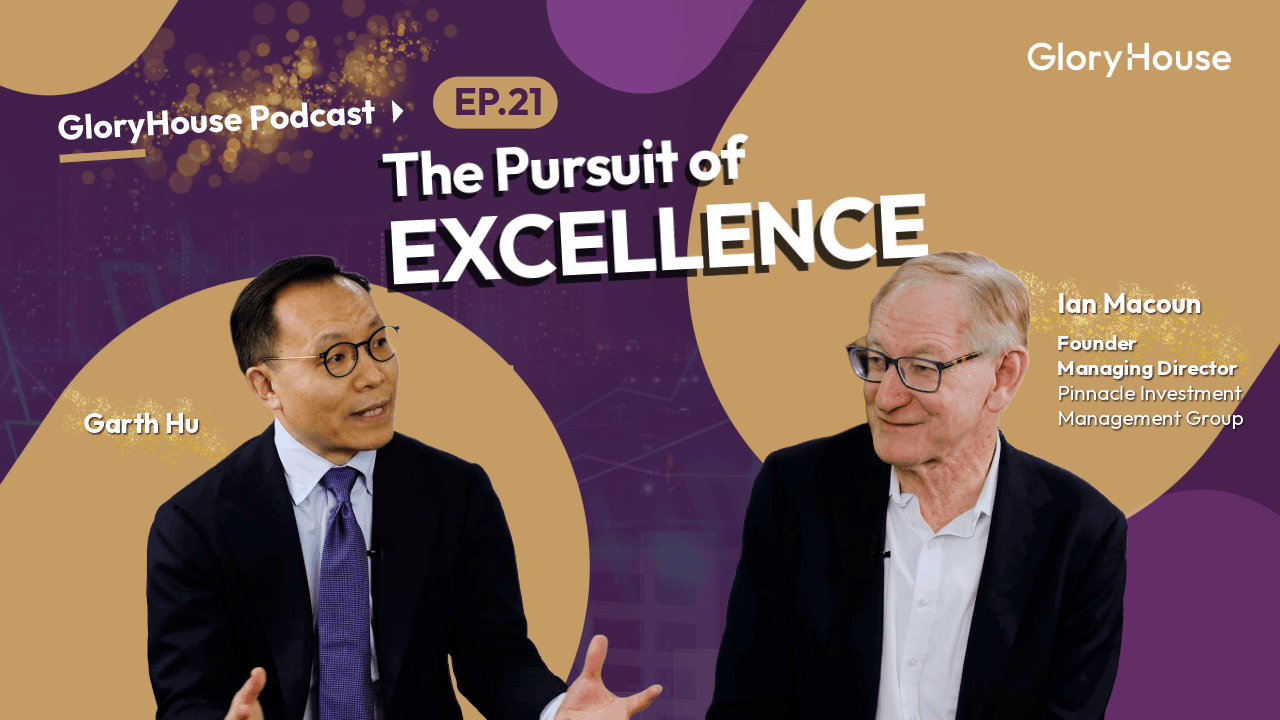
In this episode of the GloryHouse Podcast, MingXuan Li, Director and Head of Asia Markets at JLL, joins Garth Hu, Founder and CEO of GloryHouse Wealth Management, to discuss how global capital is assessing Australian commercial property. Their discussion moves from cross-border capital flows and long-term market fundamentals to sector cycles, due diligence and the role of property within a family’s broader wealth strategy.
Why offshore capital continues to consider Australia
MingXuan works at the intersection of Australian property owners and investors from markets including China, Hong Kong, Singapore and Malaysia. He observes that capital may reach Australia through different regional hubs, but the underlying objectives are often long term.
Australia’s legal framework, protection of property ownership and relative institutional stability remain important. Population growth also supports demand not only for housing, but for logistics facilities, retail services, healthcare, transport, power and digital infrastructure. For some offshore families, the objective is therefore broader than achieving the highest immediate yield. Australian property may form part of a longer-term plan for capital preservation, geographic diversification and intergenerational continuity.
These characteristics do not remove risk. Interest rates, taxation, planning rules and state policy can materially affect pricing and transaction activity. The point is that long-term investors often weigh those factors against the durability of the overall ownership and demand framework.
One market, several property cycles
The discussion highlights why broad statements about “the property market” can be misleading.
Office property remains highly dependent on location, building quality, vacancy and the surrounding business ecosystem. A well-located CBD asset with access to transport, hospitality and professional services may behave very differently from an office in a less connected precinct. Flexible work patterns and policy settings continue to influence demand, but limited turnover of tightly held prime assets can also shape pricing.
Industrial and logistics property experienced unusually strong demand during the pandemic period as e-commerce, supply-chain disruption and decentralised work increased the need for warehouse space. MingXuan describes a market that has since become more balanced. That does not mean every asset has weakened equally; location, specification, tenant demand and new supply remain decisive.
Retail is also a collection of distinct formats. In the interview, the focus is on shopping centres anchored by supermarkets and other essential services rather than discretionary high-street stores. Population growth and repeat local demand can make these assets comparatively resilient, while large sites may also provide longer-term redevelopment or intensification options.
Emerging property segments and access
Healthcare, build-to-rent and data centres extend the discussion beyond traditional office, industrial and retail assets.
Healthcare property may benefit from operators that invest heavily in their premises and therefore have stronger reasons to remain. Build-to-rent requires both development capital and long-term operating capability, and the sector has attracted significant institutional participation. Data centres and their supporting infrastructure have become increasingly relevant, but individual assets may be too large or operationally complex for many private investors to own directly.
This distinction matters. A family may access commercial property through direct ownership, a co-investment, a syndicate or a professionally managed fund. The appropriate structure depends on scale, liquidity needs, governance capacity and the level of control the family wishes to retain.
Yield is a starting point, not the conclusion
One of the clearest lessons from the episode is that headline yield cannot be assessed in isolation.
A high yield may look attractive, but it can also signal a short remaining lease, rent above the prevailing market, a tenant with limited renewal capacity or a property that will be difficult to release. Buyers need to understand when the lease began, how long it has left, how rent reviews operate, whether the tenant is likely to renew and what alternative uses are available if the property becomes vacant.
Land value and redevelopment potential can add another source of return, but value-add strategies require time, expertise and capital. Heritage properties may offer character and strategic locations while carrying restrictions and higher maintenance costs. A lower-yielding asset with a strong tenant and limited management requirements may suit one family; an underutilised asset requiring active repositioning may suit another. Neither is inherently better without reference to the buyer’s objective.
Plan the exit before the acquisition
The conversation also turns to a question that is often left too late: who is likely to own the property next?
Some families want a passive asset capable of being held across generations. Others are prepared to improve, reposition or redevelop a property before selling it. The intended holding period affects the importance of lease expiry, capital expenditure, financing and future buyer demand. Even when an asset is described as a legacy holding, a clear exit framework remains valuable because family circumstances, policy and capital requirements can change.
Leverage adds another layer. Commercial lending terms vary by asset, borrower and market conditions. Families therefore need to consider not only whether debt is available, but whether the wider balance sheet can absorb higher interest costs, vacancies or delayed asset sales.
A multi-family office perspective
For a multi-family office, property is both an investment and a family decision. It may provide income, operational premises, lifestyle utility or an intergenerational asset, but it can also concentrate capital and reduce liquidity.
That is why property decisions should sit alongside the family’s investment strategy, cash-flow needs, tax and legal advice, succession planning and governance. Trusted property, lending, legal and tax specialists each contribute a different part of the analysis. The role of a coordinated advisory network is to connect those perspectives around the family’s actual objective.
The central message from the episode is practical: begin with the purpose of the acquisition, then test the property, lease, financing and exit strategy against that purpose. Market narratives matter less than whether the specific asset can do the job the family expects it to do.
About the guest
MingXuan Li is Director and Head of Asia Markets at JLL, based in Melbourne. He works within capital markets, connecting Australian commercial-property opportunities with domestic and offshore investors, including investors from key Asian markets. His work focuses on investment assets and development opportunities, and he brings more than a decade of commercial-property experience to the discussion.
About JLL
JLL is a global commercial real estate and investment-management company. Its services span areas including property advisory, capital markets, leasing and asset management. Any description of JLL in the final publication should follow the organisation’s approved corporate wording.
About the GloryHouse Podcast
The GloryHouse Podcast brings investors, business leaders and specialist advisers into focused conversations about the decisions that shape family wealth. Hosted by members of the GloryHouse team, the series considers investment alongside governance, succession, global mobility and long-term stewardship through a multi-family office lens.
Disclaimer
This video has been prepared by GloryHouse Wealth Management Pty Ltd (ACN 690 671 606), Corporate Authorised Representative (CAR) of GloryHouse Investments Pty Ltd (ACN 690 671 553, AFSL 700198). The content in this video is provided for informational purposes only and does not constitute financial, investment, legal or tax advice. This material is intended solely for wholesale clients as defined under section 761G of the Corporations Act 2001 (Cth) and is not intended for retail clients. Any views expressed are general in nature and do not take into account your personal objectives, financial situation or needs. All investments involve risk. Past performance is not a reliable indicator of future performance.